
Dark patches, uneven skin tone and marks left behind after spots can be frustrating, especially when a product that worked for someone else makes little difference to your skin. Pigmentation has several possible causes, and the right treatment depends on understanding what you are treating first.
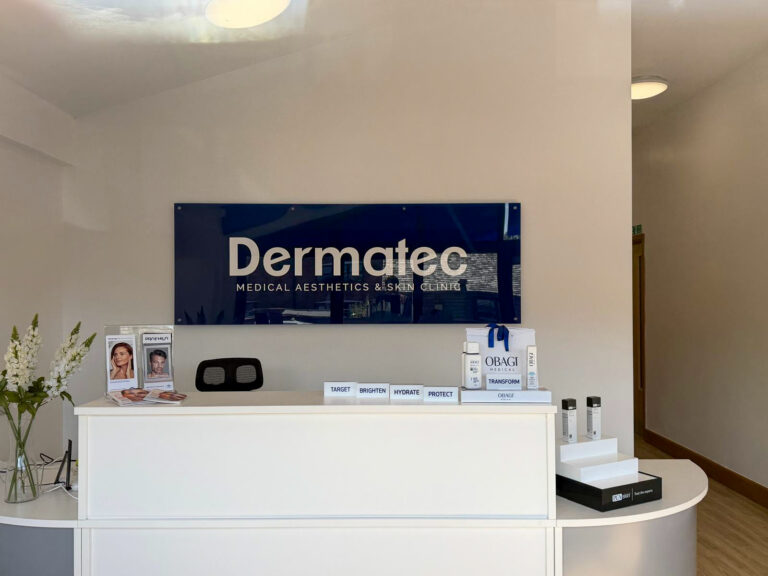
At Dermatec, a pigmentation consultation begins with a medically informed assessment of your skin and health history. We look at when the pigmentation appeared, whether it has changed, your skin type, sun exposure, current skincare, medication and any relevant hormonal factors. This helps us recommend a suitable plan and, just as importantly, recognise when a mark needs medical investigation before any aesthetic treatment.
Why do different types of pigmentation need different plans?
Melasma often appears as broader patches on the face and can be influenced by sunlight and hormones. Post-inflammatory pigmentation may follow acne or skin irritation. Sun spots can look different again. These concerns may all appear as “dark marks”, but they do not necessarily respond in the same way to treatment.
A consultation also gives us the chance to assess your skin’s sensitivity and discuss how much treatment and home care you can realistically manage. Some depigmenting programmes require consistent daily use and careful sun protection. Choosing one without understanding those commitments can lead to irritation, disappointing results or pigmentation returning.
If a spot is new, changing, irregular or bleeding, it should be assessed through an appropriate medical pathway rather than treated as ordinary pigmentation. Your safety comes before a cosmetic treatment.
Evidence-informed options for pigmentation
For suitable patients, we may recommend the Obagi Nu-Derm system. Its prescription-based approach can include hydroquinone, which reduces the production of melanin, alongside a carefully planned skincare routine. Research supports hydroquinone-based treatment for melasma, and clinical studies have also examined four per cent hydroquinone skincare systems used with tretinoin. These treatments can be effective, but prescription ingredients need proper assessment, instructions and follow-up because irritation and other unwanted effects are possible.
Another option is mesoestetic’s Cosmelan depigmenting method. This combines an in-clinic stage with a structured home-care programme designed to address existing discolouration and help manage its recurrence. Adhering to the aftercare matters: the treatment does not end when the in-clinic stage is complete. Cosmelan’s manufacturer describes clinical experience with the method, although the strength of evidence is different from that for established prescription ingredients such as hydroquinone. We will explain what is known, what the treatment involves and what results are realistic for your skin.
Neither programme is a universal answer, and pigmentation can recur, particularly when its triggers remain. Daily sun protection and a suitable long-term routine are essential parts of managing conditions such as melasma.
Expertise matters before treatment begins
Dermatec is an experienced provider of advanced pigmentation care, and our team holds ambassador status in this area. We bring that experience to the consultation: assessing your concerns, explaining your options clearly and deciding with you whether Obagi Nu-Derm, Cosmelan or a different approach is appropriate.
If pigmentation is affecting your confidence, you do not have to choose a strong treatment on your own. Book a pigmentation consultation at Dermatec in Penkridge and let us start by understanding your skin.